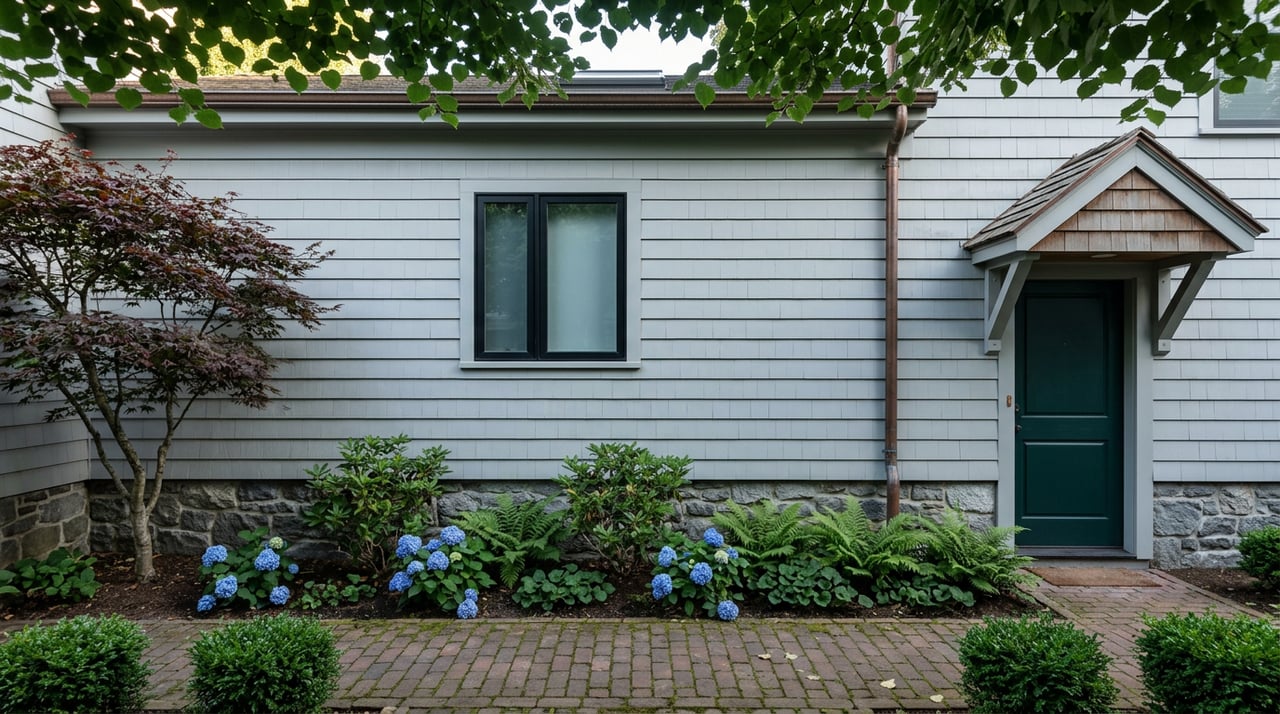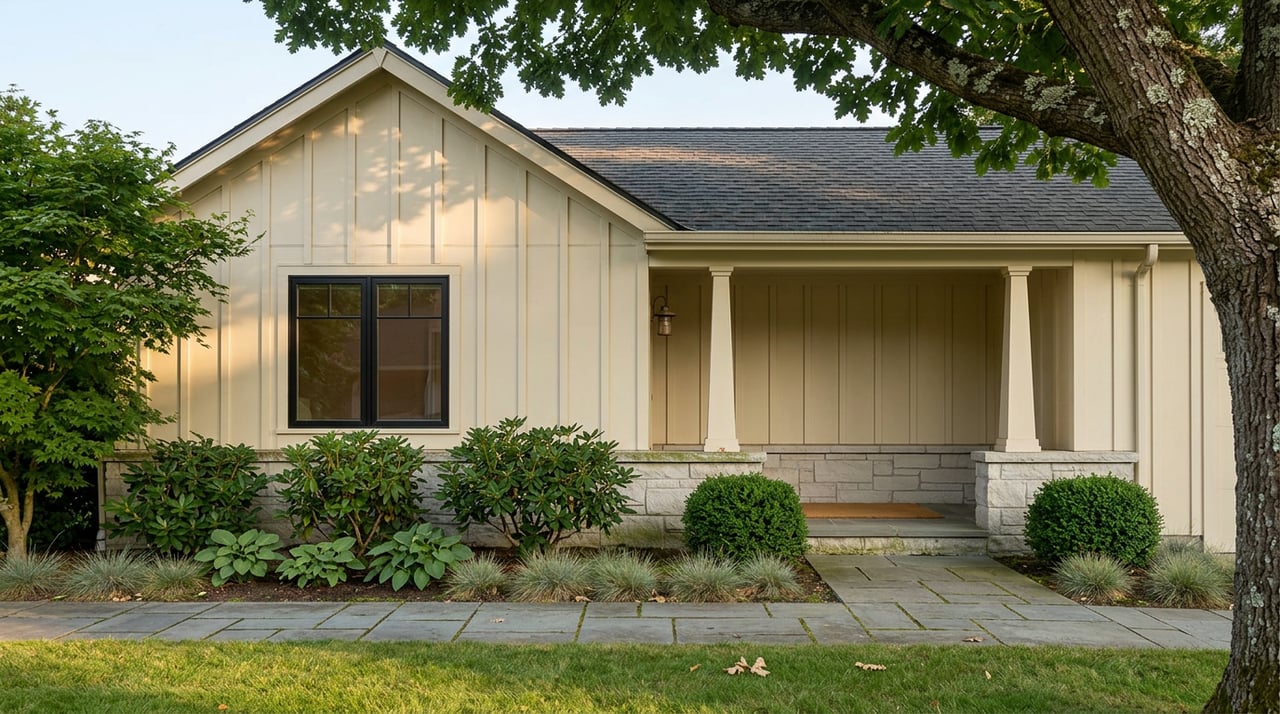
Say you spend a Saturday touring two houses in North Indian Trail. The first is a five-bedroom in Woodridge, Lennar's hilltop community off Indian Trail Road, still smelling like fresh paint. The second is a rancher a mile away, built sometime in the 1970s, with a deck out back and the kind of mature landscaping that only comes from forty years of somebody actually living there. Both sellers hand you a stack of paperwork. Both stacks are labeled the same way. Neither buyer in this scenario would guess that one stack is missing two of its most important pages.
That gap is Washington's Form 17, the state's required seller disclosure statement, and it behaves differently depending on which of those two houses you're buying. Understanding why matters more in North Indian Trail than in most Spokane neighborhoods, because this is one of the few pockets of the city where a 1970s rancher and a 2023-built subdivision home sit within walking distance of each other, both technically for sale, both asking you to sign the same-looking form.
What Form 17 Actually Promises You
Washington has required sellers of residential property to complete Form 17 since January 1, 1995, under state law. The form runs several pages and asks the seller yes, no, or don't-know questions across seven categories of property condition, from title issues to environmental concerns to the structural and mechanical guts of the house.
Once you receive a completed Form 17, you get three business days to walk away from the deal for any reason, no explanation required. That right exists because the whole system rests on one legal standard: actual knowledge. A seller only has to disclose what they actually know. They aren't required to guess, and they aren't liable for a defect they genuinely never discovered.
For a seller who has lived in a house for decades, actual knowledge is substantial. They know if the basement floods every spring. They know the furnace was replaced in 2019. They know about the roof repair after the windstorm. All of that becomes disclosed to you on paper before you're locked into a contract.
Where the Builder's Version Comes Up Short
Here's the part almost nobody explains before closing day. A builder selling a new construction home in Woodridge or Sundance Ridge, the Toll Brothers community also built in North Indian Trail, still has to hand you a completed Form 17. Washington law doesn't carve out an exemption from the form itself. But state industry guidance is explicit that new construction sellers are not required to complete the two sections buyers rely on most: Section 4, covering structural condition, and Section 5, covering systems and fixtures.
The logic tracks the actual knowledge standard perfectly. A builder who has never occupied the house has no lived experience to disclose. They didn't notice a slow leak because there was never a rainy season to notice it in. They can't tell you how the furnace performs in a Spokane January because nobody's run it through one yet. So the two sections that would normally tell you the most about a home's condition arrive blank, not because something is being hidden, but because there is nothing yet to know.
That's a real difference in what you're protected by, not a paperwork technicality. If you buy the rancher and something in Section 4 or 5 turns out to be false, you may have a case if the seller genuinely knew and didn't say. If you buy the Woodridge home and the same section is blank, there's no disclosure to have been wrong about. Your protection has to come from somewhere else.
The Warranty Standing In Its Place
That somewhere else is the builder's warranty, and it's worth treating as a document you review with the same seriousness as an inspection report. Washington's framework for new construction expects that warranty to stand in for the disclosure gap by covering the structural integrity of the home, its major systems like plumbing, heating, and electrical, and compliance with the building codes in place at the time of construction.
The problem is that most buyers never ask to see the full warranty before they're already past their inspection contingency. They see "builder's warranty" mentioned in the purchase documents and assume it works the way Form 17 works, as a snapshot of what's currently true. It doesn't. It's a forward-looking promise with its own start date, end date, and list of exclusions, and those terms vary by builder. Before you remove any contingency on a Woodridge or Sundance Ridge purchase, it's worth asking directly for the document that spells out how long structural coverage runs, what counts as a covered system failure, and what you'd need to do to file a claim if something surfaces in year two.
A Side-by-Side Worth Keeping on Your Phone
| Resale rancher (Form 17 complete) | New construction (Sections 4 and 5 exempt) | |
|---|---|---|
| Who's disclosing | The person who has lived there | The builder, who hasn't |
| Standard | Seller's actual knowledge | No lived knowledge to disclose |
| Your real protection | The disclosure statement itself, plus your inspection | The builder's warranty, plus your inspection |
| What to request | Full disclosure history, repair records | Written warranty terms, coverage start date and duration |
| Rescission window | Three business days after you receive Form 17 | Same three-day right applies to the form itself, but it won't tell you about the structure |
The Radon Detail That Runs the Other Direction
None of this means new construction in North Indian Trail carries more risk than the older stock. In at least one respect, it's the opposite, and it's worth knowing because it cuts against the instinct that older equals safer paperwork.
Spokane County has required new construction to include an active or passive radon mitigation system since the early 1990s, according to local inspection professionals who work Spokane closings regularly. That means a Woodridge or Sundance Ridge home almost certainly has radon mitigation built into its foundation from day one. A 1970s Indian Trail rancher, built decades before that requirement existed, has no such system unless a previous owner installed one voluntarily. Radon is odorless and invisible, so a home can have elevated levels for years without anyone noticing, which is exactly why it belongs on the inspection list for the resale side of this neighborhood even though Form 17 will likely say "don't know" on the question, since most sellers have never tested.
So the two properties trade weaknesses. The new build has thinner disclosure but a mitigation system already in the ground. The rancher has a fuller disclosure statement but is the one that actually needs a radon test ordered.
What This Looks Like on the Ground
North Indian Trail is built around Indian Trail Road, and daily errands there run through Safeway, Starbucks, and a short list of neighborhood restaurants including Pint House Burgers & Brews and 1898 Public House, with the Indian Trail Library branch a few blocks off. Kids zoned to the newer subdivisions attend Woodridge Elementary, Salk Middle School, and Shadle Park High School, the same three schools Lennar and Toll Brothers list for their communities here. That geography matters for this discussion because it means a buyer comparing a Woodridge floor plan against an older rancher isn't comparing two different neighborhoods. They're comparing two different paperwork trails inside the same three-mile stretch.
Before you waive an inspection contingency on either type of purchase in this neighborhood, it's worth pinning down a short list:
- If it's new construction: get the full builder's warranty in writing before your contingency deadline, not a summary of it
- If it's a resale home: ask directly whether radon has ever been tested, since Form 17 will often show "don't know" rather than a real answer
- Either way: a general home inspector can check plumbing, electrical, and structural basics, but a warranty dispute later often comes down to what the written terms actually said, not what a listing agent implied
Frequently Asked Questions
Does a builder still have to give me Form 17 if I'm buying directly from them in Woodridge or Sundance Ridge? Yes. Washington doesn't exempt new construction sellers from the form itself. They're only excused from completing the structural and systems sections, since they have no lived experience of the house to disclose.
How long does a builder's warranty typically run on structural issues? Coverage terms vary by builder, which is exactly why it's worth requesting the specific document rather than assuming a standard length. Ask for it in writing before your inspection contingency expires.
Do I still need a professional inspection on a brand new home? Yes. A warranty covers defined defects over a defined period. An inspection tells you the condition of the home on the day you're buying it, which is a different thing entirely.
Should an older Indian Trail rancher be tested for radon even if the seller marked "no" or "don't know" on the disclosure form? It's worth considering. Radon has no smell or visible sign, and homes built before Spokane County's mitigation requirement took hold in the early 1990s were never required to have a system installed.
Whichever side of this neighborhood you're shopping, the paperwork is telling you something different depending on the age of the house in front of you. Reading it that way, instead of treating every disclosure packet as interchangeable, is the difference between finding out about a problem now or after you've already closed.
If you're weighing a Woodridge new build against something older in North Indian Trail and want a second set of eyes on what each disclosure packet actually covers, Alejandro Ventura is glad to walk through it with you. Let's Connect.